Mimo: Learn Coding/Programming
Top Games












Game Screenshots

Game Introduction
🏆 Expert Verdict & Overview
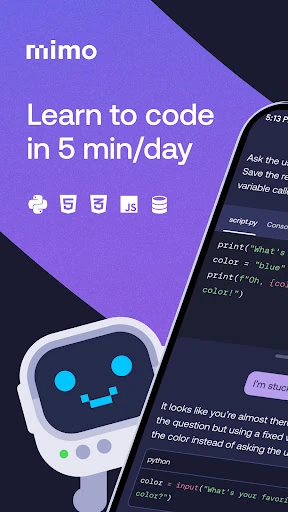
Mimo: Learn Coding/Programming has solidified its position as a frontrunner in the mobile Education landscape by evolving beyond simple syntax memorization. As a Senior Analyst, I observe that Mimo distinguishes itself by integrating modern AI-assisted development workflows directly into its curriculum. Unlike traditional platforms that offer isolated exercises, Mimo focuses on a holistic career trajectory, bridging the gap between a novice's first line of code and the creation of production-ready software. It is an authoritative solution for users seeking to navigate the shift from passive learning to active, industry-standard project building in Python, JavaScript, and Web Development.
🔍 Key Features Breakdown
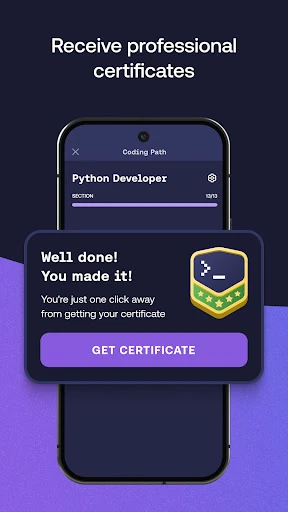
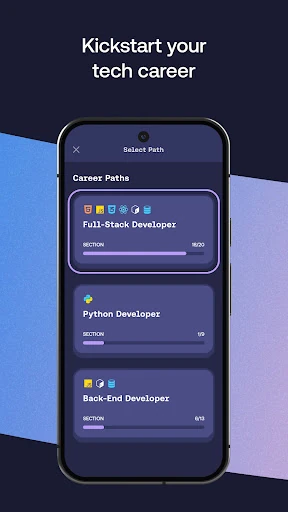
- Structured Career Paths: These guided journeys solve the "choice paralysis" many beginners face by providing a clear roadmap from fundamental logic to specialized roles like Front-End or Full-Stack development.
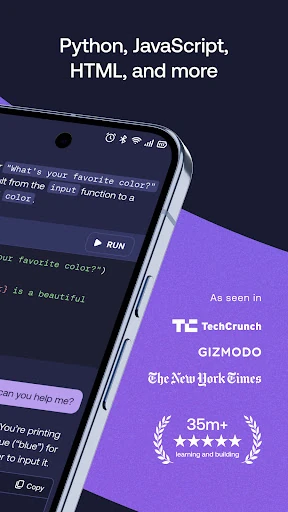
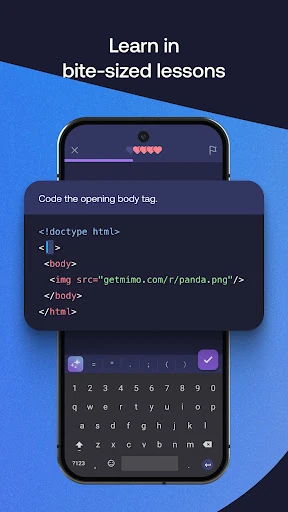
- Integrated Mobile IDE: By allowing users to write, run, and edit code directly within the app, Mimo eliminates the technical barrier of setting up complex local environments, making practice possible anywhere.
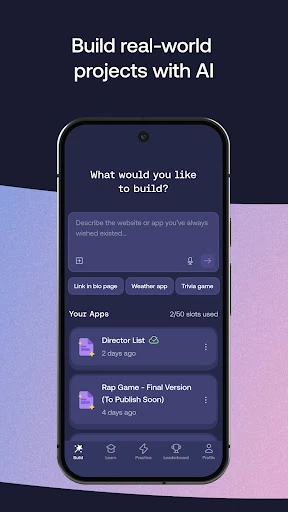
- AI-Powered Co-pilot Integration: This feature mirrors modern professional workflows, teaching users how to leverage AI for debugging and code optimization rather than just relying on manual input.
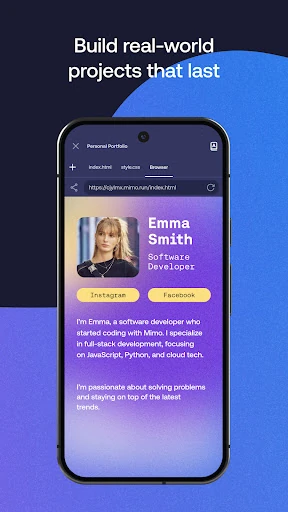
- Portfolio-Ready Projects: Instead of abstract quizzes, users build tangible assets like websites and apps, solving the problem of how to prove competency to potential employers.
- Gamified Retention Engine: Through the use of streaks and leaderboards, the app addresses the common hurdle of learner burnout and lack of motivation in self-paced education.
🎨 User Experience & Design
The UI of Mimo is a masterclass in mobile-first educational design. Recognizing that coding on a small screen can be inherently frustrating, the interface utilizes high-contrast syntax highlighting and a specialized keyboard layout to minimize typing errors. The UX is built around "micro-learning" principles—bite-sized lessons that fit into a daily routine—without sacrificing depth. The transition between conceptual theory and the interactive IDE is seamless, maintaining a high level of user engagement that is often lost in more academic or text-heavy coding applications.
⚖️ Pros & Cons Analysis
- ✅ The Good: Exceptional hands-on approach that prioritizes building real projects over theoretical rote learning.
- ✅ The Good: Forward-thinking curriculum that includes AI-driven development and modern frameworks like React and TypeScript.
- ❌ The Bad: The mobile-only interface can become restrictive when working on complex, multi-file projects that require a larger visual field.
- ❌ The Bad: Advanced features and certain career tracks are locked behind a subscription model, which may be a barrier for students on a strict budget.
🛠️ Room for Improvement
To further elevate the platform, Mimo could benefit from an expanded offline mode for its IDE, allowing users to continue coding in low-connectivity environments. Additionally, introducing a "Peer Review" system where more advanced users can provide feedback on portfolio projects would simulate a professional "Pull Request" workflow, adding another layer of career readiness to the experience.
🏁 Final Conclusion & Recommendation
Mimo: Learn Coding/Programming is best suited for aspiring developers, career-switchers, and hobbyists who require a structured but flexible entry point into the tech industry. It successfully democratizes technical education by making complex concepts accessible and actionable. For anyone looking to build a foundation in modern software development while maintaining a busy schedule, Mimo is a premier recommendation.
You May Also Like